Daily Supplements
Vitamin D and Magnesium in the Morning Routine of Active Men
Marcus Chen
·
·
9 min read
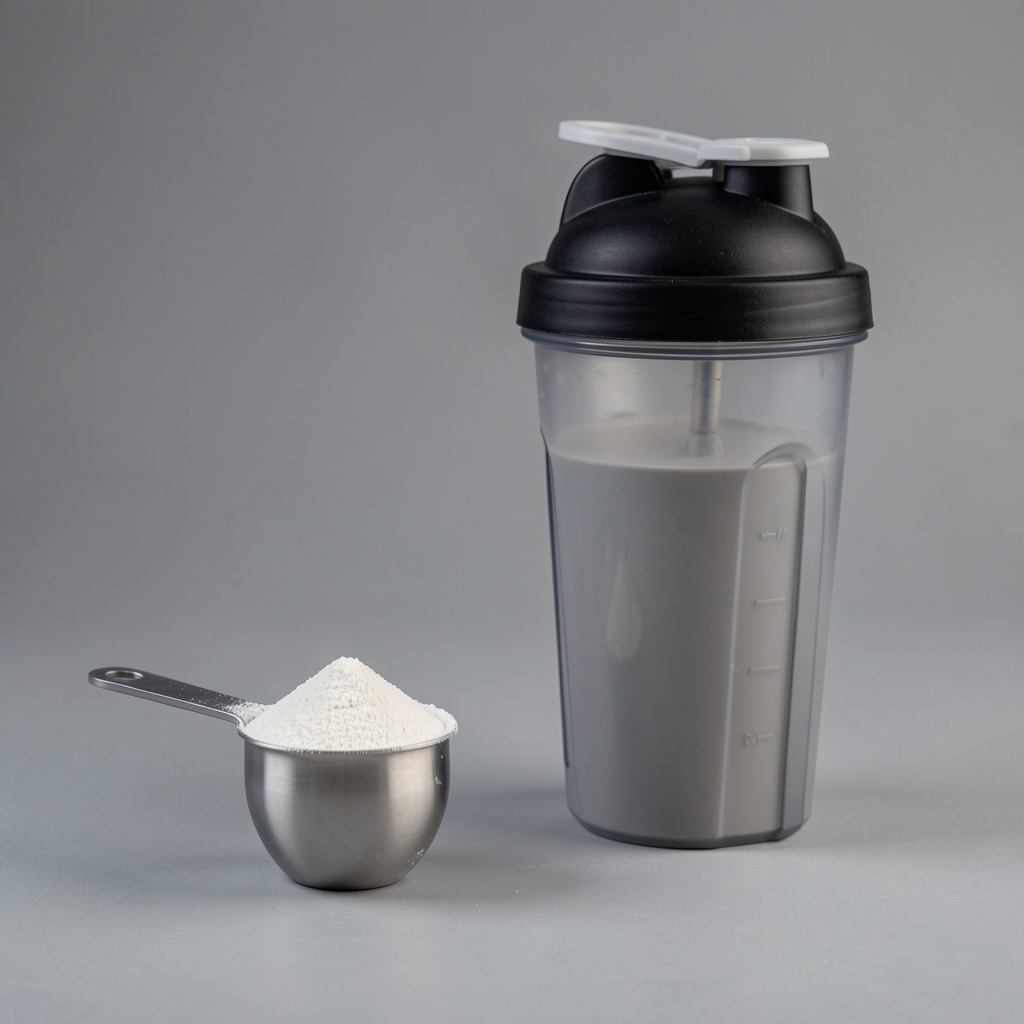
Creatine occupies an unusual position in the men's supplement conversation. Unlike many additions that cycle in and out of editorial attention, creatine has accumulated a body of independent nutritional research that is both substantial and relatively consistent. The published evidence for its role in supporting physical output over time — particularly in resistance training contexts — is among the most well-documented in the nutritional supplement space. This editorial review examines what that evidence shows, how the daily practice of creatine supplementation is typically approached by active men, and what the responsible editorial framing of that evidence looks like.
Creatine is a compound produced naturally in the body — primarily in the liver, kidneys, and to a lesser extent the pancreas — and is also obtained through dietary sources, principally red meat and fish. Its role in the body's energy production system has been studied extensively. The compound functions as part of the phosphocreatine energy pathway, which supports rapid energy availability during short, intense bursts of physical activity. This is the foundational rationale behind its presence in the supplement stacks of men engaged in resistance training, and it is a rationale that has held up across decades of independent nutritional research.
The distinction between creatine's natural dietary presence and its supplemental form is worth establishing clearly. Dietary intake of creatine from red meat and fish typically provides a fraction of what research-oriented supplementation protocols deliver. The supplemental form — almost universally creatine monohydrate in the independent literature — allows for higher and more consistent daily intake, which is the basis of its observed contribution to physical output over time.
The editorial position of this journal is not to provide instruction on supplementation, but to describe what the published nutritional literature records. What that literature shows, with notable consistency, is that daily creatine monohydrate supplementation supports physical output over time in the context of resistance training. The size of that contribution and the conditions under which it is most reliably observed are matters for the nutritional evidence, not for editorial enthusiasm.
Independent nutritional research examining creatine's contribution to physical output is extensive. The consistent finding across this body of research is that daily creatine supplementation supports physical output during repeated high-intensity efforts — the kind of efforts characteristic of resistance training. This finding has been replicated across varied populations, activity levels, and study designs, which gives it a degree of evidential weight that is relatively rare in the nutritional supplement space.
What the published evidence does not show with the same consistency is a straightforward relationship between creatine supplementation and outcomes that are further downstream from physical output — body composition changes, long-term strength progressions, or sport-specific performance improvements. These areas show positive signals in a substantial portion of the research, but the relationship is moderated by a wider range of variables including dietary protein intake, training intensity, individual baseline creatine status, and other factors that make clean editorial claims difficult to support honestly.
The responsible editorial framing, which this journal aims to model, is one that represents the evidence for creatine's role in supporting physical output over time as well-founded and consistent, while being clear that the more specific claims sometimes attached to creatine in commercial wellness writing go beyond what the independent nutritional literature reliably shows.
"The evidence base for creatine's role in supporting physical output is, across the independent nutritional literature, one of the most consistently replicated in the supplement space — a fact worth noting without amplification."
In the men's supplement journal genre, creatine has a recognisable documentary pattern. It appears either as part of a loading phase — a period of higher intake over several days, followed by a maintenance phase — or as a consistent daily dose without a loading period. The independent nutritional literature suggests that both approaches result in similar steady-state creatine levels over a period of weeks, with the loading approach simply reaching that state more quickly.
The timing question — when in the day to take creatine — attracts considerable editorial attention in men's wellness writing, often with more certainty than the published evidence justifies. The available research suggests that the timing of creatine supplementation relative to training may have a modest effect on its contribution to physical output, with post-workout timing showing slightly more favourable signals in some studies. However, the consistency of daily intake appears to be a more significant variable than any specific timing window, which is a useful piece of context for men building a daily supplement routine.
In the editorial record of men's supplement habits, creatine is most commonly documented as a stable long-term presence in the stack rather than a periodised addition. Unlike some supplements that are adopted in advance of specific events or training cycles, creatine tends to appear as a baseline maintenance addition — taken daily regardless of training schedule. This consistency is both consistent with the published nutritional rationale and represents the practical approach most commonly documented in independent men's wellness writing.

For men who maintain a daily supplement stack, creatine's position within that stack is typically straightforward. It does not compete with other commonly stacked nutrients for absorption or timing considerations in ways that create meaningful complexity. Vitamin D, omega-3, magnesium, zinc, and B vitamins — the foundation stack that appears consistently across independent nutritional writing for active men — can all be taken alongside creatine without practical conflict.
The interaction that attracts the most editorial discussion is between creatine and protein. The nutritional evidence on this pairing is nuanced. Neither supplement requires the other to function, and both have independent evidence bases for their respective roles — creatine for physical output support, protein for daily intake targets alongside whole food sources. Where they interact meaningfully is at the practical level: men who are consistent about both tend to be men who are generally intentional about their nutritional habits, which makes attributing effects to either in isolation difficult outside controlled research conditions.
Caffeine is another addition that appears regularly in editorial discussions of creatine. Earlier research suggested an interaction between caffeine and creatine that might reduce the observed contribution to physical output; more recent independent reviews have moderated that finding. The current editorial position, drawing on available nutritional literature, is that the combination is not a significant concern for most active men and does not warrant restructuring a daily supplement routine around.
The men's supplement editorial space has a complicated relationship with creatine. On one hand, it is among the most consistently supported additions in the independent nutritional literature, which gives credible editorial voices a reliable subject. On the other hand, the commercial supplement industry has layered onto creatine a range of claims that go well beyond what the evidence shows — novel delivery mechanisms, proprietary blends, and performance claims that the published nutritional research does not support with the same consistency as the base compound.
This journal's editorial perspective on creatine is a straightforward one: the published nutritional evidence for creatine monohydrate's role in supporting physical output over time is consistent and well-documented, making it one of the more defensible inclusions in a men's daily supplement stack. The specifics of how any individual responds to it, and the degree to which it contributes to any particular outcome, are variables that editorial writing cannot resolve — they belong to the individual's own observed record.
What this record can offer is a frame for reading the creatine conversation with appropriate discernment: confident about the foundational evidence, sceptical of specific performance claims, and consistent in daily practice as the most reliable implementation strategy. That is the editorial lens this journal applies to the creatine subject and to the supplement conversation more broadly.
The independent nutritional literature is clear and consistent on one point regarding creatine form: creatine monohydrate remains the most studied and consistently supported option. A range of alternative forms — buffered, ethyl ester, hydrochloride, and others — have been marketed with claims of superior absorption or reduced side effects. The published nutritional evidence does not consistently support the superiority of these alternatives over monohydrate, and several have failed to replicate the published evidence base that monohydrate carries.
For the purposes of this editorial record, creatine monohydrate is the reference point because it is the form the independent nutritional literature has studied most extensively. Whether micronised or standard, whether sourced from established supply chains or generic producers, the compound itself — at appropriate daily intake levels — is what the published evidence addresses.
The editorial record of men's supplement habits shows creatine monohydrate persisting as the preferred form across writing that takes the nutritional evidence seriously. It is, in the language of this journal, a well-documented addition to the daily stack of active men, with an evidence base that is proportionate to its prominence in the men's supplement conversation.

Marcus Chen established ireldon Compendium as an independent editorial record of men's daily nutritional and supplement habits. His writing examines the published evidence behind the supplement conversation without commercial affiliation. He is based in Jakarta, Indonesia.
About the editor

An independent editorial record of daily supplementation habits and nutritional awareness for active men.